How reading turned me into an empath

My history with reading
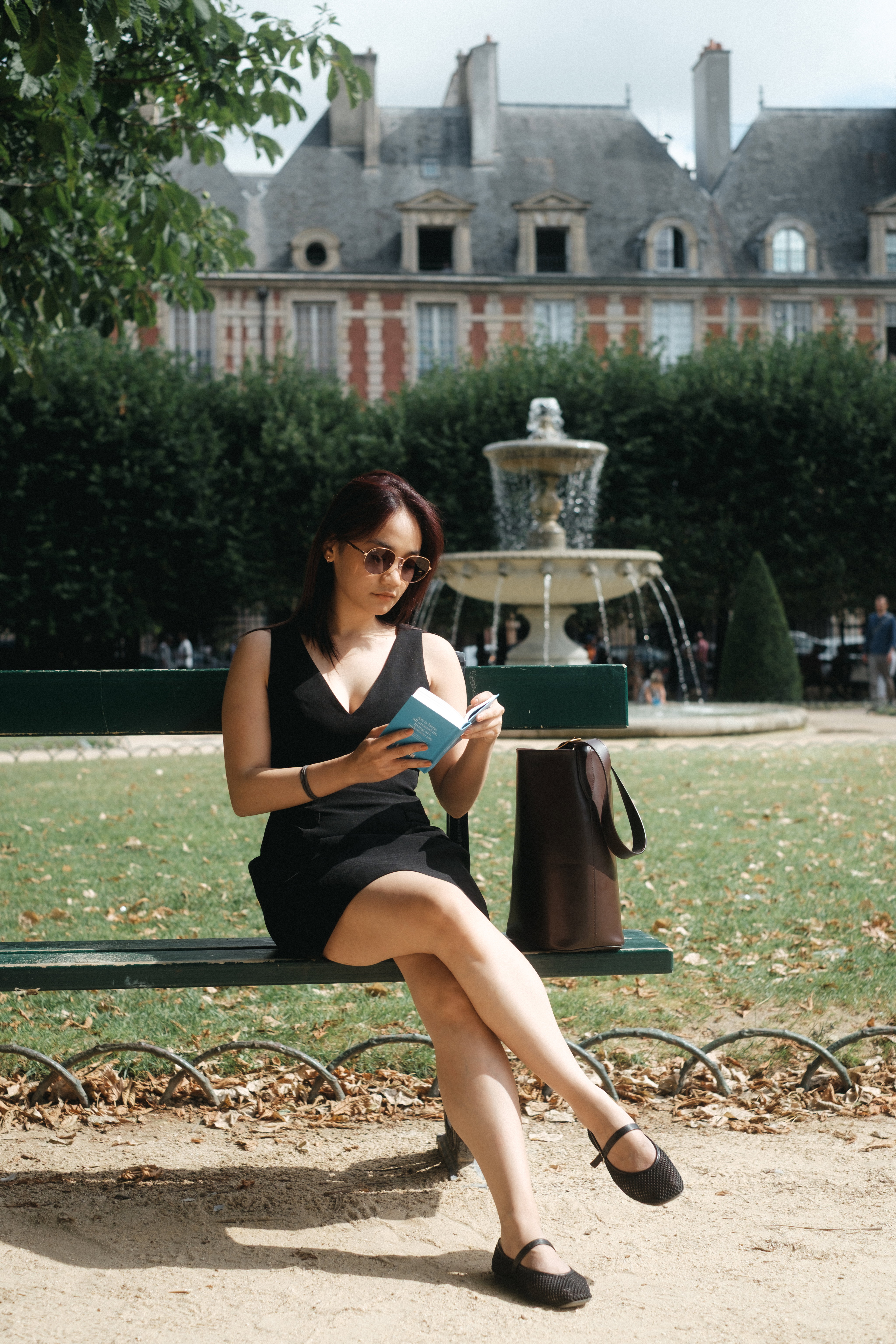
One summer as a teenager, when my mom was out of a job and money was tight, I picked up a very inexpensive hobby: reading. I would go to a relative’s house and use their wifi to download free e-books to my beat-up school tablet. I remember lying on the tile all night reading (it was summer, we could not afford to use AC, and the floor was cold), barely noticing the sun coming out. These were times I finished a whole book overnight, and pulled out my device to read no matter where I was.
I have a fond memory of an event, a gathering for the youth, completed with performers, loud music, and festival atmosphere. My friends and I were sitting on a picnic mat when I started reading on my ipod touch. A good friend narrated, “At nagbabasa nanaman po siya.”
I was known as the girl who was barely present, always lost to reading. It did not only keep me occupied; I remember being so excited feeling like I was living different lives through the characters in novels I read. It didn’t matter that I was reading YA romance. In its own little way, I knew even then that reading was expanding my understanding of life while keeping me entertained.
I didn’t always have this relationship with books. In high school, my classmates were exchanging novels and mangas, but I thought I could only have one thing, and so I focused on visual arts. Considering what I do for a living and with most of my free time as an independent adult, how things turned out so differently will always be a curious case for me.
In college, reading turned into more of a duty than a hobby. The nature of my studies made sure I would read chapter after chapter of different books about the same concept, get to know every theory, analyze every possible application, and absorb as much knowledge as possible. My already existing affinity for reading became useful, but no longer fun. This was when I turned to writing.
As an adult, I’ve had an on-and-off relationship with reading. There are still books that keep me up all night turning page after page, but I have never read again as much as I have that one summer, despite the resources available to me now. Being able to buy any book I want, often more than one at a time, is a constant source of satisfaction. However, true fulfillment comes only after I’ve actually finished the book, which comes at a much later time.
If I were to describe my current relationship with reading, I would say it is more limited, but intentional. Other than the occasional delulu feel-good romance, I mostly read non-fiction. This is a declaration I make proudly when introducing myself. I’ve also become familiar with a few Asian authors whose works I can always count on for wisdom or comfort. As the literature I consume changes, so does my appetite for books.
Sensitive but understanding, because reading taught me that people are not just good or bad. We are far more complex than that.
Tonight, while doomscrolling on Instagram, I saw a post about how an incoming generation who doesn’t read books are not only lazy or shallow, but a generation devoid of empathy. The post, albeit briefly, talks about how reading allows one to experience the lives of others, which paves the way to understanding them. It is a cliché that reading reconciles our differences. But in many ways, it truly does.
Applying this idea to myself, I’ve always wondered how I can be sensitive but tolerant at the same time. I get hurt easily, but I find it difficult to blame others for their actions, no matter how unwarranted and detrimental to me. While I don’t willingly subject myself to mistreatment, I do consider myself an understanding and non-judgmental person.
Talking about people who have hurt me, I usually find myself pondering on why they behaved that way instead of denouncing them for their faults. What internal battles do they face that triggered this projection? Who treated them this way that they felt the need to pass it on to others? What childhood event or relationship dynamic would explain their behavior? This is the reason why, while I could make a list out of all the people in my past that I chose not to associate with anymore, there is barely anyone I just hate plainly. It is impossible to hate someone when you know there is a reason for their actions, even when you’re fortunate enough to not understand it.
Sometimes, the fact is that people are just shitty. There is no excuse for that. But I will always choose the lightness afforded by knowing I tried to empathize. I tried to understand. Because I know people are often multi-faceted. They act one way but feel the other. Sometimes, they make choices that hurt others, then punish themselves through eternity for it.
For the empath
On the other hand, my sensitivity makes me susceptible to feeling deeply the grief of people close to me. On more than one occasion, I found myself crying over someone else’s pain. Not in a patronizing way, but due to how deeply I feel. A friend was crying to me about a betrayal, and the next thing I knew, I was crying too. Not because I knew what it felt like, but because knowing someone I care about was suffering from that magnitude of pain was not only disheartening, but also painful in itself.
Someone who used to be very important to me asked, in a tone laced with both indifference and ridicule, “Bakit ang dami mong pinaglalaban?” More recently, I opened up to a colleague about a problem I’m having at work, and his advice was to “be less invested, and don’t worry about it too much.” This was more well-meaning, so I was able to explain that I’m not sure I can take that advice. I feel that the main reason I do well in my endeavors is because I care a lot and try really hard.
Many times and in different contexts, we have all heard the advice that whoever is more emotionally invested loses. Even coming from a place of protection or care, I find it difficult not to argue against this. Perhaps it looks like I lost because I got more stressed, angrier, sadder. But from every situation, I depart knowing I did what I could. I did not scrimp on empathy, on understanding, on trying to make things work. And the peace that comes with that certainty is far stronger than anything I could ever get from being half-assed.
Relying only on my own experiences, I would never be able to dig this depth of insight. 80% of this, I have learned through reading. Getting to know characters, peeking into their thoughts and emotions, embracing the idea put forward by multi-leveled stories that there is so much more to people, to life, than we can ever see with our own eyes.
Over time, reading has quietly but crucially shaped how I approach life and treat people. It helped me accept that reactions often have explanations. And when this explanation does not make sense to me, I should be thankful instead of spiteful. Pain does not always look the same on everyone.
Reading not only broadens perspective or enriches the intellect. It introduces new ideas, greater dimensions, and emotions far more intricate than those we have and will ever experience firsthand. More than anything, it expands our understanding.
And that is why it is important to continue reading.
Comments
No comments yet. Be the first to comment!